
Astha Chhatri - Author
2026-08-10
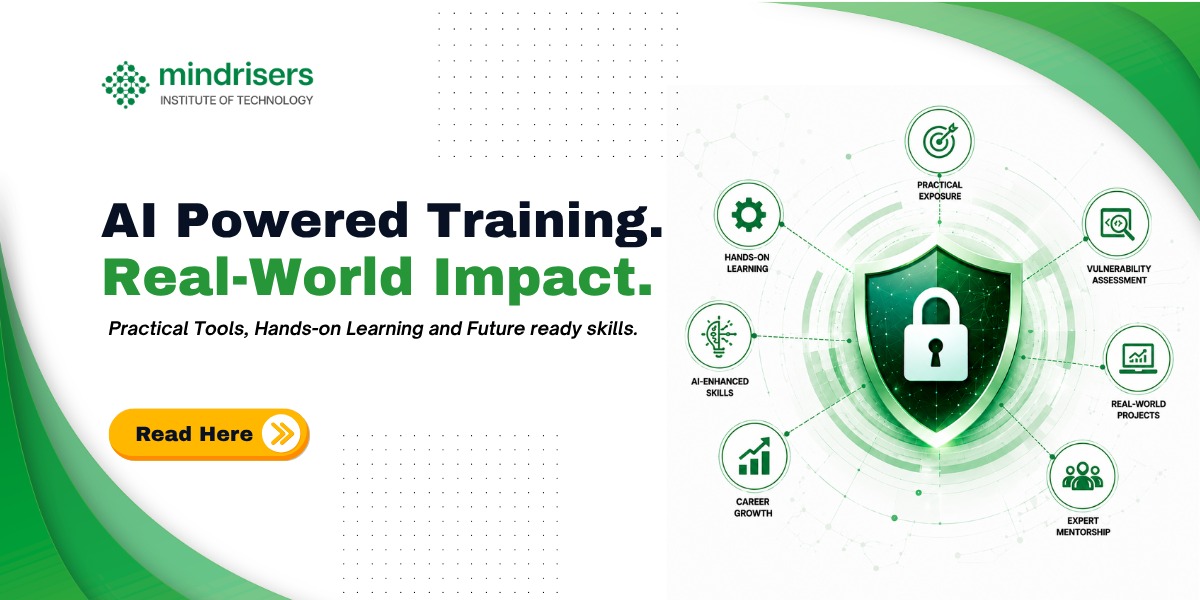
The Mindrisers Cybersecurity revised curriculum was done to align with the changing cybersecurity trends that focus on practical security testing, cloud computing, mobile application security, and artificial intelligence. However, what difference do these changes make to the students and IT professionals? This blog aims to discuss the benefits of the updated cybersecurity course and highlight how the practical and how Artificial Intelligence is Taking over CyberSecurity
Learn Through Practical Experience Instead of Theory
Learn With a Hands-On Approach, Not Just Theory. One of the primary benefits of the new Mindrisers curriculum is the sheer amount of hands-on experience students get.
Security lessons are often taught in a theoretical manner, which fails to prepare students for the real world, where employers are looking for graduates with proven practical skills.
Students enrolled in Mindrisers’ Cybersecurity Training with AI get exposed to real-world cybersecurity challenges and environments through extensive lab training. Throughout the course, students interact with cybersecurity testing technologies including:
• Burp Suite
• Wireshark
• Nmap
• AWS CLI
• Android APK analysis tools
Students also get the opportunity to practice testing and identify common vulnerabilities such as:
• Cross-Site Scripting (XSS)
• SQL Injection (SQLi)
• Server-Side Request Forgery (SSRF)
• Cloud IAM misconfigurations
• Mobile application security weaknesses
Instead of just learning about these vulnerabilities in theory, students get the opportunity to experiment with them in controlled lab conditions, making the learning process more engaging and relevant to the real-world.
Develop Job-Ready Cybersecurity Skills
Modern cybersecurity employers want people with practical skills, not theoretical knowledge. Instead of learning skills that were relevant several years ago, the revised curriculum offers students an opportunity to develop a comprehensive set of cybersecurity skills needed in the modern workforce. Skills such as
• Web application security
• Mobile application security
• Cloud security
• AI-assisted cybersecurity
• Vulnerability assessment
• Security reporting
• Penetration testing fundamentals
will give students an upper hand when landing a career in cybersecurity.
By having a broad skill set, students increase their chances of passing job interviews while being more productive at their new positions. At the end of the course, students have developed practical skills relevant to the cybersecurity industry instead of just theoretical knowledge.
Acquire Valuable Skills for IT Professionals Looking to Transition into Cybersecurity
The new curriculum is not only perfect for beginners. Students taking the course as IT professionals will be able to build on their existing technical skills and be able to transition into cybersecurity easily. The course covers security-specific skills that can be added to an individual’s existing skill set relevant to networking, software development, systems administration, technical support, and cloud computing. This means that students can switch to a career in cybersecurity without first spending years learning the basics of IT.
This will enable students to target jobs such as
• Security Analyst
• Penetration Tester
• Cloud Security Engineer
• Application Security Analyst
• Vulnerability Assessment Specialist
amongst other related careers.
Learn How Artificial Intelligence Assists Cybersecurity
Artificial Intelligence is becoming an essential part of modern cybersecurity operations. As AI continues to influence the IT industry and education, understanding how it changes the way students learn and work with technology has become increasingly important. Read more about AI and IT Education: What Changes, What Stays, and Why Both Matter to explore the broader impact of AI on IT education.
While some fear that it will lead to mass unemployment, others believe that it will make humans more productive. In the cybersecurity space, AI is being leveraged to make security operations more efficient by allowing security analysts to delegate some of the monotonous tasks to AI systems.
The revised curriculum ensures students get the opportunity to learn how AI-assisted technologies can be used to enhance cybersecurity operations including
• Threat detection
• Source code analysis
• Vulnerability identification
• Security automation
• Incident response and investigation
By learning how to work with AI, students will be more prepared for the workforce where they will be expected to utilize such technologies.
Why These Benefits Matter
Every benefit listed in this article was made intentionally. Mindrisers’ Updated Cybersecurity Course: AI-Integrated Training for the Future was the title of our previous blog, where we discussed why the curriculum was tweaked in the first place. The course underwent several upgrades in response to the demand for students with practical cybersecurity skills, the rise of cloud security, increased reliance on AI, and evolving cybersecurity threats. All these benefits will enable the students to further their careers in the cybersecurity space. These benefits will enable students to be more productive in whatever career path they choose in cybersecurity.
Having technical skills relevant to the modern workplace is vital if one hopes to climb the career ladder in cybersecurity. Whether you are looking to get your first cybersecurity job, switch careers, or simply upskill, the revised Cybersecurity Training with AI has several benefits for students willing to take it up.
Continue Your Cybersecurity Learning Journey
Having discussed the benefits, it is time to talk about something even more exciting – the course content. If you are curious about what tools, modules, and labs are covered in the revised Mindrisers cybersecurity training, make sure to check out the second part of this blog series titled “Inside the Course: Modules, Tools & Career Paths.” We will discuss the course in detail and highlight how the curriculum is structured to help students learn industry-relevant skills.
How AI-Powered Training Compares to Traditional Cybersecurity Courses
Many of the leading cybersecurity courses introduce the concept of AI as a separate topic or provide only a brief overview before proceeding to other modules. However, in Mindrisers’ updated curriculum, the elements of AI-assisted technologies are incorporated into such topics as Web Security, Mobile Application Security, and Cloud Security. This allows students to get an understanding of how AI can be applied to solve various security-related tasks and learn essential cybersecurity topics in more detail.
The other significant difference is that the updated curriculum includes a Mobile Application Security module. While many cybersecurity courses only provide an overview of areas related to network security, Mindrisers gives detailed insights into Android application security. Students learn how to analyze an apk, understand the application’s permissions, intercept mobile traffic, perform emulator-based mobile application testing, and analyze files using AI-assisted tools.
By emphasizing hands-on experience rather than simply learning theoretical concepts or utilizing automated tools, Mindrisers students gain a fundamental understanding of the core principles of cybersecurity. In addition, they obtain practical knowledge of how to use various technologies, including AI, in real-life security assessments. This allows them to become well-rounded cybersecurity experts with a comprehensive view of the modern security landscape.
Who Benefits Most from This Training
Although all students can benefit from the revised curriculum, there are certain categories of students that will find the course particularly useful.
Cybersecurity Bootcamp For Career Changers
It can be incredibly challenging for career changers to find cybersecurity programs that do not require students to have years of technical expertise. Fortunately, students switching careers from other backgrounds can feel right at home in this course. The curriculum starts right from the basics and works its way up to more advanced penetration testing concepts.
However, career changers can also find themselves alienated by a course that goes too slow or does not appreciate their existing technical knowledge. The next category of students can find the course particularly useful.
For Working IT Professionals
In contrast to beginners in the tech world, experienced IT professionals usually have a solid technical foundation. The revised curriculum is specifically tailored to give working professionals the essential security skills they need to make the transition into the cybersecurity field. The course goes in-depth with security-specific skills including cloud IAM misconfigurations, mobile application security weaknesses, and AI-assisted vulnerability identification. It skips the basics since most IT professionals already have a foundational concept of networking and software development. This way, IT workers can get the knowledge they need to pivot into a career in cybersecurity without wasting time relearning concepts they already know.
The Lab-Centric Style Offers Maximum Benefit For Students and Graduates
The lab-centric nature of this course is precisely what makes it ideal for students and recent graduates. Unlike traditional lectures, students get the opportunity to go through realistic cybersecurity challenges and have lab results they can put on a portfolio or discuss in an interview. The practical components of the course will help students develop the judgment and experience required to identify and remediate security weaknesses. This is particularly useful for students who have no practical industry experience apart from what they learn in class.
Real-World Scenarios Students Work On
This program ensures students have a solid foundation of knowledge and skills by learning to troubleshoot realistic security problems. This involves:
• Scanning a sample e-commerce site for potential SQL injection and XSS vulnerabilities
• Reviewing a sample android application for insecure API access and permissions
• Reviewing cloud configurations for IAM misconfigurations and Amazon S3 exposure
• Accelerating source code review processes with AI during a penetration test
By working through these examples and others, students can develop the hands-on experience that cannot come from theory alone. It also ensures that students have tangible examples they can use to demonstrate their skills to an employer.
Frequently Asked Questions
1.Is this training suitable for complete beginners?
Yes, it is perfect for students with no prior knowledge of cybersecurity. Students will start from the basics and move on to advanced penetration testing methodologies.
2.How much time does the training involve in theory versus hands-on experiments?
The program has a substantial number of hands-on experiments compared to theoretical concepts. The hands-on experiments utilize industry-standard tools including Burp Suite, Wireshark, Nmap, and AWS CLI. Students get less time allocated to theoretical lessons.
3.Does the course cover AI tools in depth, or just mention them?
The curriculum offers students the opportunity to develop a solid working knowledge of AI-assisted cybersecurity solutions. Since the curriculum is highly practical, students are exposed to AI-assisted solutions in source code analysis, vulnerability identification, and security automation.
4.Will this training help me if I already work in IT but want to move into security?
Yes, it can. The curriculum is perfect for IT professionals looking to make the switch to cybersecurity. Networking or software development professionals can use the course to supplement their skills and make a successful transition into the cybersecurity field.
Tips for Getting the Most Out of the Program
While it is possible to get a lot out of this course, there are some ways students can improve their overall learning experience and gain more value from the training. Students who take the course should make sure they get the most out of their training by adopting these key strategies.
Firstly, approach every lab activity as though you are doing it for a living. Always assume there is someone on the other end waiting to see your results. This way, students can develop excellent report writing skills that will come in handy during a job interview. Secondly, make sure you do not use AI tools to do your thinking for you. While these tools can help you be more efficient, make sure you understand the processes involved. In other words, knowing why a vulnerability exists is more important than being able to use an automated tool to find it. Lastly, always go back to previous modules and refresh your understanding of the topics as you progress. Understanding the relationships between Web Security, Mobile Application Security, and Cloud Security becomes easier when you learn all four modules. Going back to prior lessons will often open your eyes to concepts you did not fully understand at first.
Conclusion
The benefits of AI-powered cybersecurity training go far beyond just learning a few new tricks. It empowers students with judgment, confidence, and hands-on skills needed to address real-world security challenges such as testing web applications for vulnerabilities, securing cloud environments, and using AI to accelerate penetration tests. Cybersecurity professionals who know how to wield AI will be in the best position to advance their careers as the cybersecurity landscape evolves alongside new technologies.
Start Building Future-Ready Cybersecurity Skills
Cybersecurity is no longer just about securing computers anymore - it is about cloud computing, mobile applications, AI, and digital businesses. Mindrisers Institute has developed the Cybersecurity Training with AI program to help students and IT professionals gain the necessary skills to pursue a career in cybersecurity.
Students and professionals enrolling in this program can gain valuable cybersecurity skills with an emphasis on hands-on lab experiments, cloud security, web application security, mobile application security, and AI-assisted technologies. This course is perfect for anyone looking to start or advance their cybersecurity career in Nepal.
Recent Post
View All
From Classroom Learning to Real-World Experience: My First Step into Digital Marketing
2026-08-24.415 Views
Inside Mindrisers Cybersecurity Course: Modules, Tools & Career Paths Explained
2026-08-13.467 Views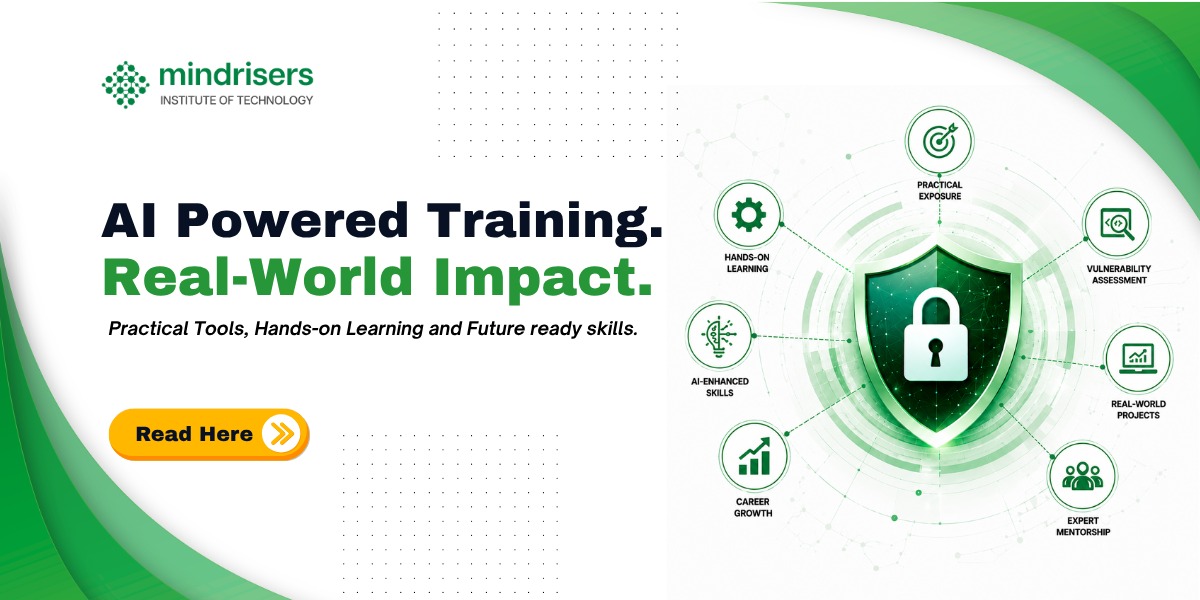
What Are the Benefits of AI-Powered Cybersecurity Training?
2026-08-10.477 Views
Artificial Intelligence is Taking over CyberSecurity
2026-08-04.509 Views

Never miss an Opportunity !
Want to learn TOP 2025 IT Skills ?
We open IT skill classes Monthly in Design, Development, Deployment, Data etc.
Have something to Ask ?
get admission enquiry